
Innovative Technology for Maintenance
Innovative Technology for Maintenance
The past decade has seen an increase of about 10% in the total length of underground drains and sewers managed by the DSD, i.e. from 4,283 kilometres to 4,717 kilometres. To ensure Hong Kong's sizeable and complex drainage network is properly maintained, the DSD, under the precondition that the safety of frontline staff must be safeguarded, has been taking innovative measures, such as using robots and new pipe rehabilitation technologies, to enhance work efficiency and bring benefits to the public.
Remote-controlled Desilting Robot
When stormwater is discharged to the sea through box culverts, the washed-off gravel and dust will accumulate gradually at the drains to form silt. To minimise flooding risks, the DSD inspects the box culverts on a regular basis and arranges desilting if necessary to ensure proper functioning of all drains. During the year, we introduced a new type of remote-controlled desilting robot to assist with desilting to overcome constraints of the traditional desilting method and improve work efficiency and safety.
If workers use the traditional desilting method, they are required to enter confined box culverts to install and operate desilting devices, thus exposing themselves to certain safety risks. Since the traditional method requires interception of water flow in the culverts to allow workers to work in an environment free of flowing water, desilting is limited mostly to the dry season. On the contrary, the remote-controlled desilting robot can take over diving tasks to spare workers from working in the confined and submerged space of box culverts, thereby enhancing work safety. In addition, using a robot allows desilting to be carried out in the rainy season, hence expediting the work process and lowering the cost.
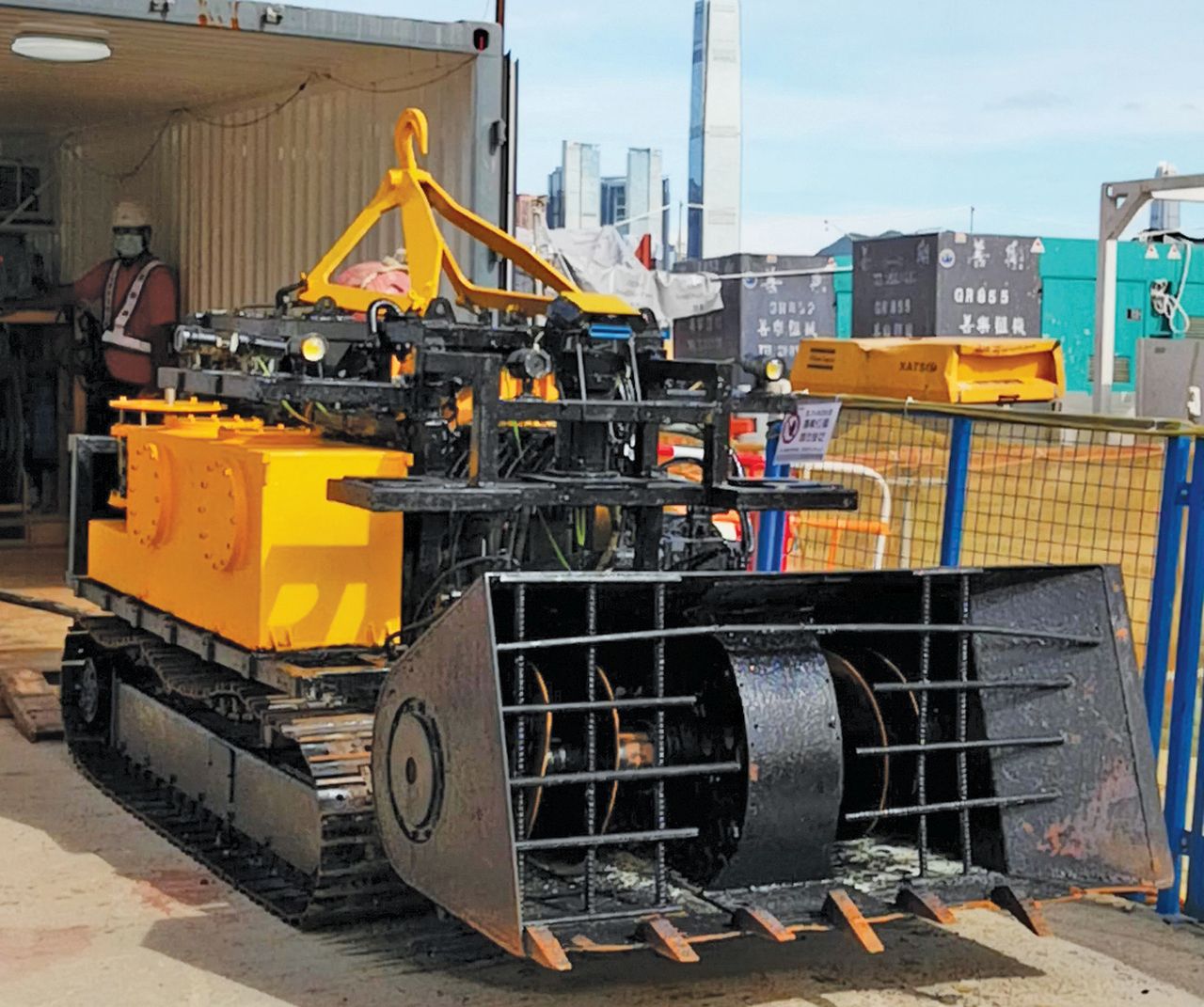
Using remote-controlled desilting robot to enhance desilting efficiency
For the relevant information, please refer to the website below:
https://www.devb.gov.hk/en/home/my_blog/index_id_389.html
Trenchless Pipe Rehabilitation Technologies
Almost 2,100 kilometres of underground drain and sewer pipes in Hong Kong have been in use for 30 years or longer, many of which are showing signs of ageing as well as wear and tear. As a precaution, the DSD has carried out preventive rehabilitation works aimed at substituting trenchless rehabilitation technologies for the conventional cut-and-cover method to replace damaged pipes, thereby minimising the impact of the project on road traffic and daily life. The DSD is currently using three types of trenchless pipe rehabilitation technology, namely spiral wound rehabilitation technology, cured-in-place-pipe (CIPP) lining, and slip-lining technology.
Spiral wound rehabilitation technology
Spiral wound rehabilitation is a centrally computerised technology. Steel-reinforced polyethylene strips are spirally wound by the winding machine. These strips are then joined by a fusion of polyethylene materials to form new pipes in the host pipe.
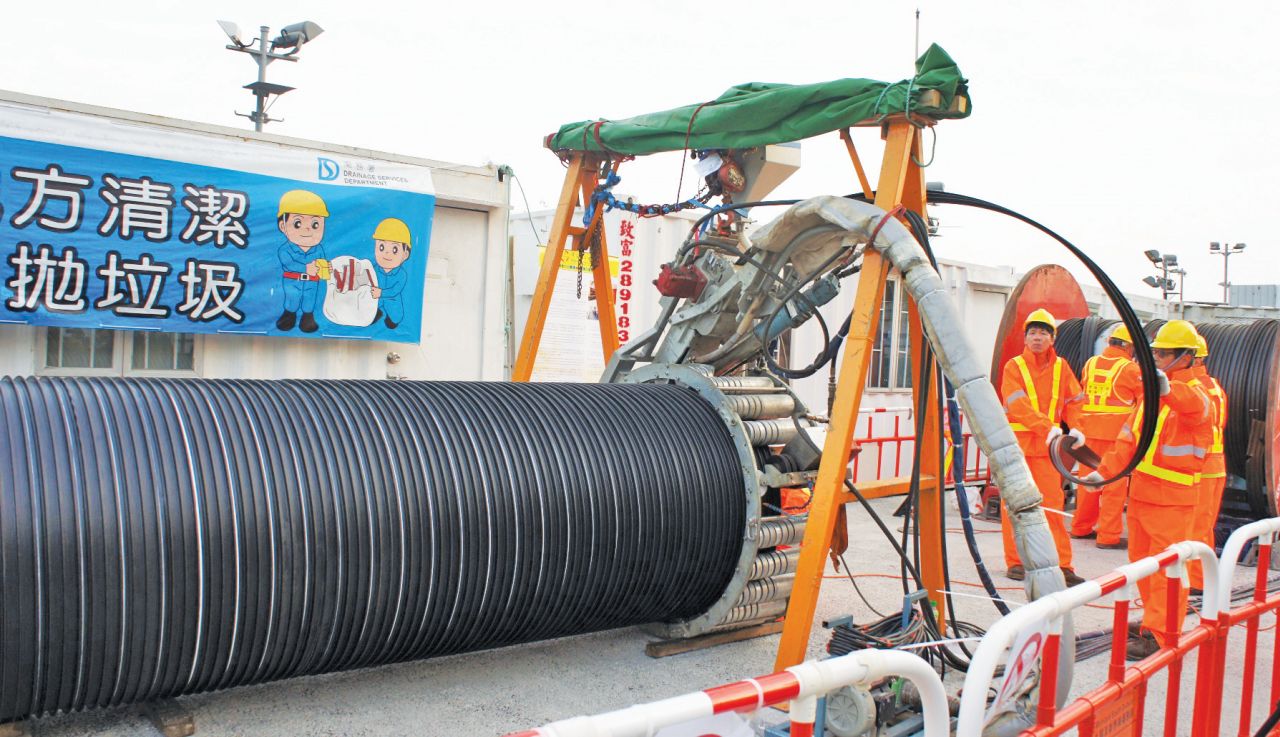
Cured-in-place-pipe lining
CIPP is another trenchless rehabilitation technology whereby compressed air is used to insert into the existing pipe a five- millimetre thick soft polyester liner which, when exposed to steam or hot water, will expand and harden to form a new pipe.
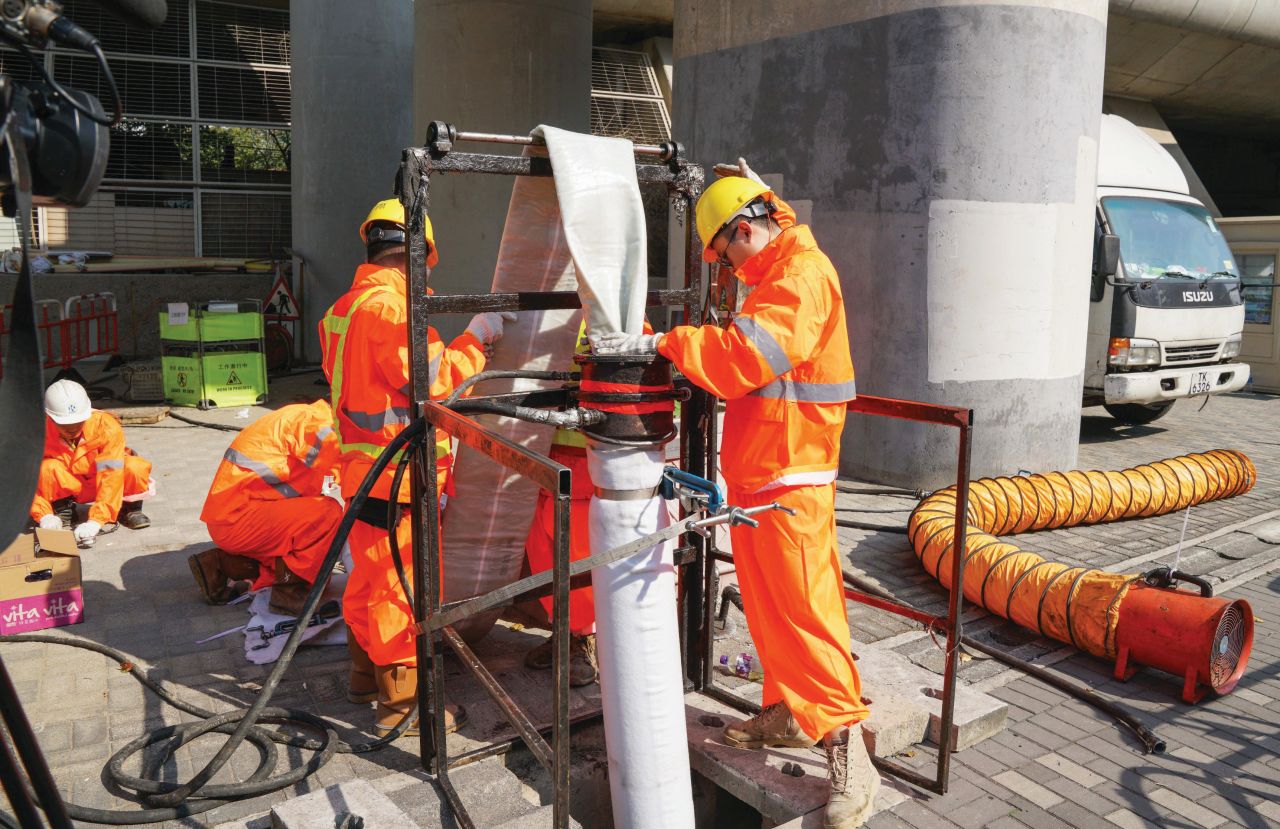
Slip-lining technology
Slip-lining technology involves the formation of a new pipe by pushing a fibreglass plastic liner into an old or damaged pipe section by section and filling the gap between the new and old pipelines with cement slurry. As temporary interception of flow of water in the existing pipes is not necessary during the work process, this method is applicable to sewers with a high flow rate.
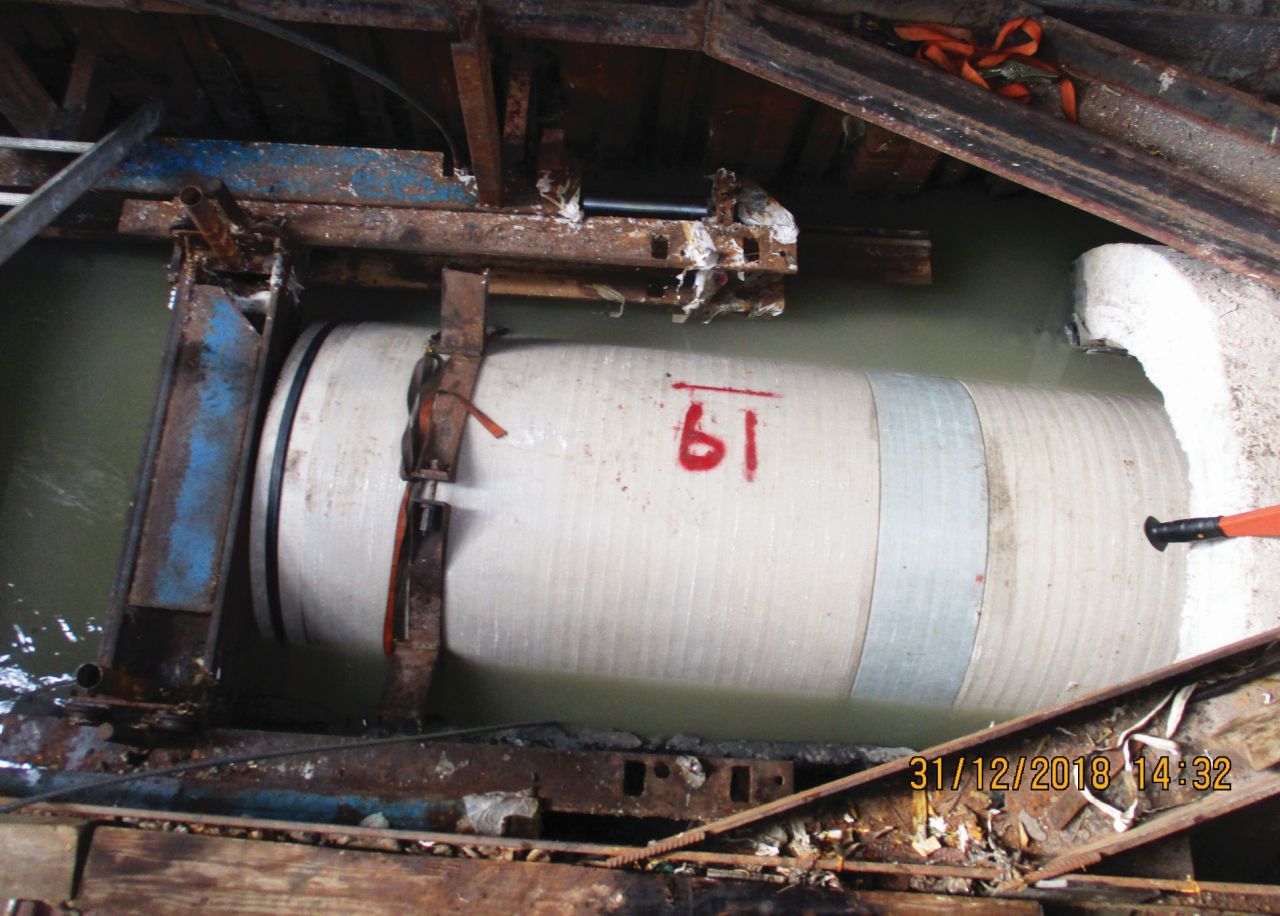
For the relevant information of Trenchless Pipe Rehabilitation Technologies, please refer to the website below: